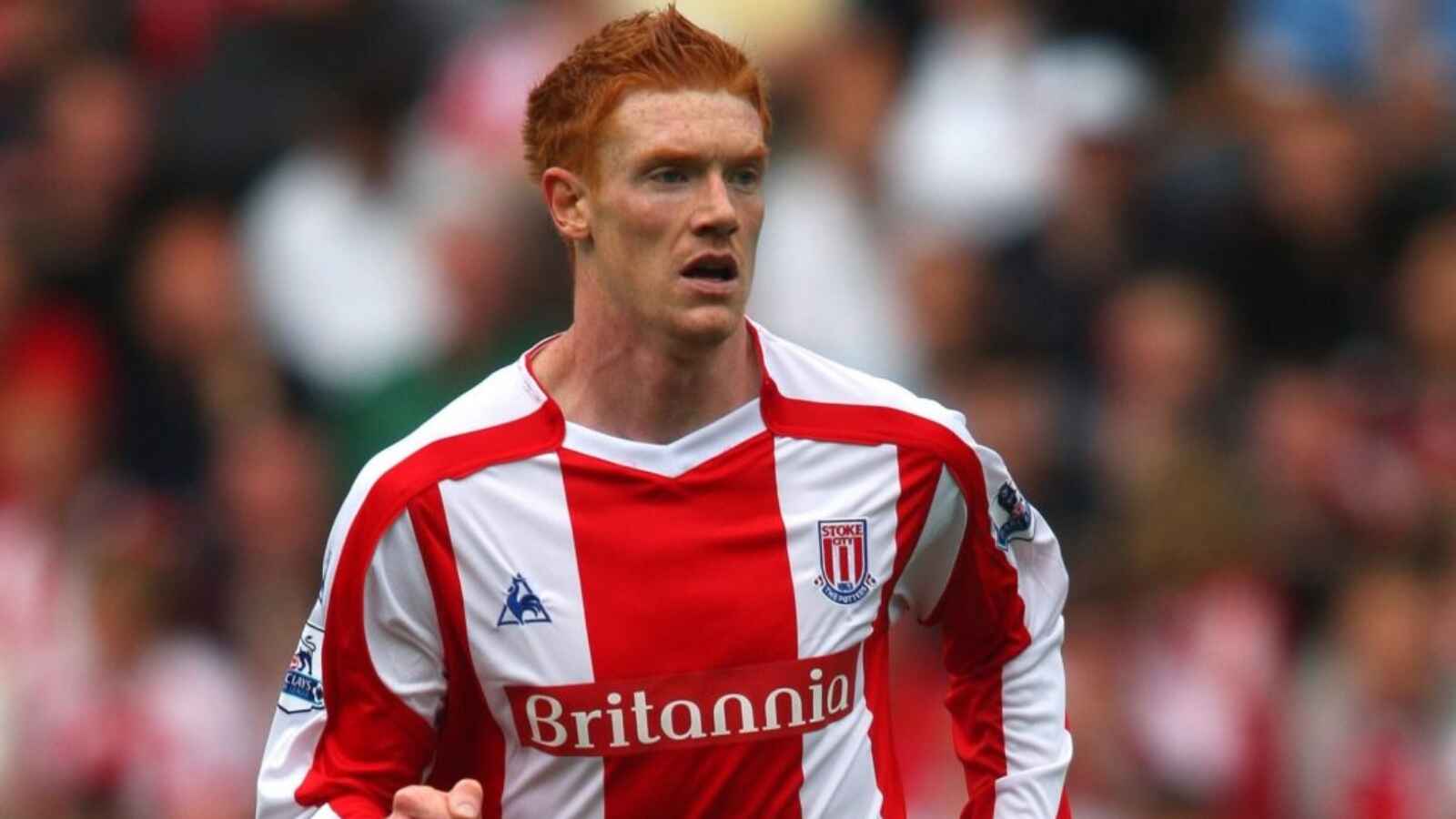
Dave Kitson is a football speaker with a story few players could tell.
A former Premier League striker for Reading, Stoke City and Portsmouth, he built his career in the public glare, then spent years writing anonymously as The Secret Footballer, pulling back the curtain on the pressure, politics and mental strain inside the professional game.
This interview carries real weight because Kitson is not speaking in neat sporting clichés.
He talks about Portsmouth’s administration, unpaid players, angry supporters, anxiety, football’s silence around mental health, and the cost of saying difficult things before the game was ready to hear them.
His view of football is blunt, lived and uncomfortable in places, which is exactly why it matters.
In this exclusive interview with the Motivational Speakers Agency, Dave Kitson discusses resilience during one of Portsmouth’s darkest periods, why culture and psychological safety shape high performance, and what finally led him to speak openly about being The Secret Footballer.
For exclusive stories and all the detailed EFL news you need, subscribe to The Football League Paper website, digital edition, or newspaper from as little as 14p a day.
WATCH THE LATEST FOOTBALL LEAGUE PAPER PODCAST HERE
Coping with Portsmouth’s administration
Question One: When Portsmouth went into administration, how did you cope with the uncertainty, the pressure and the anger from supporters?
Dave Kitson: “When I think back to my time at Portsmouth, the resilience that we had to show as players was huge. We were in a really difficult situation.
“The club was in administration. Nobody was being paid. The club had said we could leave, but not all of us had other clubs that we could go to.
“We needed the training to stay fit for the time that an opportunity might arise for us to go and play somewhere else. We couldn’t just sit at home and not do anything.
“So we were trapped in this environment.
“The fans didn’t want us to be there, and it was toxic. It became really toxic, and it was unfortunate for everybody concerned. It was a real catch-22 for everybody.
“You really needed resilience. People get very emotive about football, particularly fans, especially if they think their club is genuinely going to go to the wall.
“Of course, you have all the empathy as much as anybody else, but you also have your own life to take care of as well. So it’s very difficult.
“I think the emotion that the fans were showing would spill over into anger and aggression at times.
“What I learned was to try and kill them with kindness, to try and make them see the situation, that there was a human element to this as well, which needed to be factored in, which perhaps they hadn’t considered.”
Building culture as a manager
Question Two: What has your playing career taught you about building culture and trust as a manager?
Dave Kitson: “Culture is everything. Culture is absolutely everything.
“If you’ve got a good culture, you can achieve high performance. With a really good culture, we start from a simple premise, which is we give the players trust. We give them psychological safety.
“So, we create an environment where they are comfortable airing any problems that they have, any ideas that they have.
“Anything that’s on their mind, they are free to say it, and they’re comfortable.
“They might not always get their own way, but it’s about offering those players the trust to be able to come out with this stuff and say what’s on their mind.
“From giving those players trust, you will breed self-motivation. They will bond a lot quicker as a squad.
“That’s exactly what’s happened. We’ve done that across the football club, and it’s been really successful.”
Revealing The Secret Footballer identity
Question Three: After years of speculation around The Secret Footballer, what was behind the decision to finally speak about it openly?
Dave Kitson: “I am The Secret Footballer. I’ve never said that out loud before.
“There’s been a huge amount written about it. It was an idea that came to me in a moment where I wasn’t happy with where football was going as a whole.
“I needed an outlet to express it, and I needed it for my own mental health.
“I’ve been writing ever since I was a kid. It’s a passion of mine. As I said at the top, I wanted to be a travel writer.
“That was my passion. Maybe I’ll get to do it one day.
“The writing was really cathartic. It helped me to process a lot of what was going on in football. The things that just didn’t make any sense to me at all.
“Is it something that I would do again, knowing what I know now? Probably not.
“People from all over the place come up to me and ask me the same question, and you run out of excuses in the end.
“But it’s kind of nice to unburden myself with the whole thing.”
Why anonymity mattered
Question Four: Why did anonymity feel necessary if you wanted to speak honestly about football?
Dave Kitson: “The Secret was never a naming-names thing. That’s not what it was about at all. It was: this is what happens in this industry.
“It made an attempt to say why it happens that way. A lot of the time, it never made any sense.
“So I would write this stuff and leave it for people to decide, pick through and form their own opinions.
“It was fun for a while, and then it became something which bred a huge amount of anxiety.
“I had a football career. I had a big contract, and if I had been outed, I would have been sacked on the spot and ostracised from the game.
“Now enough time has passed where you could look back at it. Everybody’s got a podcast now. You can’t stop people from talking about football. Everybody has an opinion.
“What’s changed is that now everyone has an outlet to express that opinion. It wasn’t like that back then.
“The stuff that was in the columns and in the books was genuinely new. People hadn’t heard it before. It changed football in this country. It changed the way things are done.
Stress & anxiety
“It led to some real overhauls at the highest levels, which I’m proud of.
“But the stress that it caused, the anxiety, the very worst thing that happened to me was that I wrote an article, and this was back at a time when people didn’t talk about mental health.
“Nobody talked about mental health in football. If you spoke about your mental health, you didn’t play.
“You were seen as weak. There’s still a little bit of that now.
“I really wanted to change that. I really wanted to bring that conversation to the fore because I was struggling myself.
“I wrote a column for The Guardian called Sometimes There’s Darkness Behind the Light.
“It was about my own struggles, and it said that there was a mental health epidemic in football, which there was and still is.
“It made a prediction that it was only a matter of time before somebody would take their own life.
“I submitted that column on the Friday. It went out on the Saturday. On the Sunday, they found Gary Speed dead.
“That’s when the whole Secret Footballer idea and concept became not fun anymore.
Guilt
“It gave the column credibility in the worst possible way.
It was really difficult, and I struggled with guilt for a long time that I hadn’t written that column earlier, and that we might have prevented what happened from happening.
“I struggled with that, and then I became so angry at the authorities for being really passive on the issue of mental health, and not doing enough and not helping.
“I still feel anger towards them. Fortunately, the people that were in those positions are no longer there, and things have changed. Things have got better.
“But that tragedy was the most horrendous thing that could ever happen. I felt such sympathy for his family. It was so unnecessary.
“That was the day that The Secret Footballer went from being a cult column to this thing that everybody was now going to as this sort of bible on football.
“It was credibility in the worst possible way.
“Not long after, I stopped. I disappeared, and I stopped writing.”
This exclusive interview with Dave Kitson was conducted by Tabish Ali of the Motivational Speakers Agency.
READ MORE: Former Reading and Stoke City star Dave Kitson on why bad cultures kill teams




Follow us
Read our latest news on any of these social networks!


Tackle the News
- Sign Up for our weekly Football League Newsletter Today!