

Dave Kitson built his career the hard way. He came through non-league football, made more than 400 appearances across the Premier League and Football League, and was twice named Reading Player of the Year.
His story gives him real authority when he speaks about pressure, standards and what it takes to perform at the top level.
He was part of Reading’s record-breaking 106-point Championship-winning season before later spells with Stoke City, Portsmouth, Sheffield United and Oxford United.
Across that career, he experienced very different dressing rooms, demands and football cultures, which gives his perspective real depth.
For exclusive stories and all the detailed EFL news you need, subscribe to The Football League Paper website, digital edition, or newspaper from as little as 14p a day.
WATCH THE FOOTBALL LEAGUE PAPER PODCAST HERE
Career
Since retiring, Kitson has stayed closely involved in the sport.
He founded the Dave Kitson Academy in 2023, which the agency says has become the biggest football academy in Berkshire and has coached more than 10,000 young players.
He has also worked as a coach and mentor, and is now working as an expert football speaker, drawing on his experience in the game and his insight into performance pressure, culture and mental health.
In this exclusive interview with the High Performance Speakers Agency, Dave Kitson reflects on the chance that changed his career, the culture behind Reading’s rise, and what football taught him about trust, pressure and performance.
Non-league opportunity and breaking into football
Question One: Your journey into professional football did not follow the route most players expect. How did an unplanned chance in non-league football become the moment that changed everything for you?
Dave Kitson: “I think the thing with football, because I came at it from a completely different angle, was I never set out to be a footballer.
“It was one of those things that just kind of happened. I wanted to be a travel writer. I wanted to get around the world, and I wanted someone to pay me to do it.
“So, I fell into football, and the reason I fell into football was because I was playing for a non-league team and our striker broke his leg and I was put up front to take his place. And I managed to score these goals.
“But I remember having a real sort of clarity of thought that it was a big opportunity, and I think that’s something that speaks to a lot of people who go on and have some kind of success, which is recognising when your opportunity has presented itself and not missing it.
“There’s a lot of people who don’t recognise the opportunity that’s in front of them and they end up missing it. It just passes them by.
“And there are opportunities in life every day, every week, every month, every year, if you’re alert and if you’re looking for them.
“And I remember having a real thought, even then at a young age, that that was a real opportunity to make a mark.
“Fortunately for me, I was able to take advantage of it, and I became a professional footballer and found myself eventually playing in the Premier League.”
Reading’s Premier League success
Question Two: When Reading reached the Premier League, what allowed that team to stay competitive against stronger squads with greater individual talent?
Dave Kitson: “When we got to the Premier League, I found it almost very chesslike.
“The game was very chesslike in terms of it was really easy to spot the patterns that teams were trying to do against you.
“We played in a very aggressive, front-footed, almost swashbuckling style of football, which is entertainment. That’s what we grew up with.
“That style of football comes from the culture instilled at the club and into the players, which is if we trust you, if we trust you to be the best players that you can be, that will lead to a self-motivation, and that self-motivation can be used to push yourselves under your own steam and push each other.
“And that really was the key to it – that was fundamental to the success that we had at Reading.
“And as I say, once you’ve got that, and it’s hard, it’s hard to get, but it’s the trust.
“If you give the players the trust, they’ll reward you with their own self-motivation, and then the team becomes stronger than the sum of its parts.
“In the Premier League, you saw really good players, but not always a team. And because of that, you were able to beat them.”
Culture behind Reading’s promotion season
Question Three: Reading’s promotion season is still remembered for more than results alone. From your perspective, what role did culture, recruitment and shared ambition play in building a side that outperformed expectations?
Dave Kitson: “The culture of that club at the time, it was the thing that you might miss from the outside looking in.
“We had talented players, but we had something more than that – we had a culture in our club which was everyone was super hungry to get to the next phase, which was to get to the Premier League.
“We could never have imagined that we would break the points record and it would still be standing 20 years later.
“But the seeds were sewn for the club to be successful, right from the chairman to the director of football to the management to the recruitment.
“And the way that we went about that recruitment, which was trying to find players that had been missed, it was very much a moneyball style and bringing players on a budget.
“So, for example, the whole squad cost about £35 million.
“For comparison, the team that finished second, Sheffield United, had spent £5 million on a striker, on one player.
“So, I’ve always been fascinated by that. That really is where my sort of passion for the psychology of football and the culture of the workplace and what can be achieved when you have a really, really good culture that everybody buys into, that there’s no limits if you get that right.”
Life and culture at Stoke City
Question Four: You have spoken about the value of trust and freedom within a team. How different did Stoke feel when you arrived, and what did that contrast reveal to you about football culture?
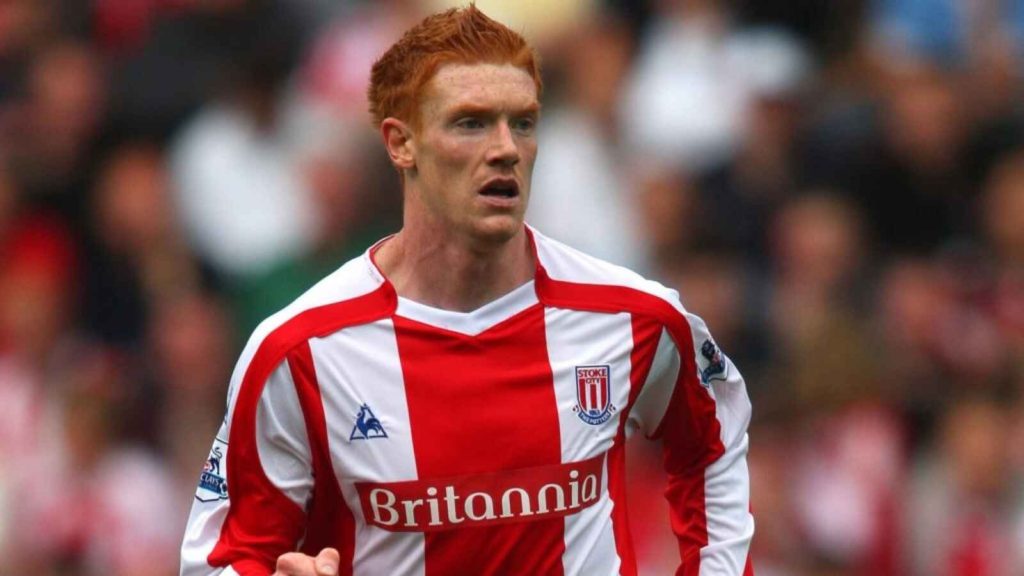
Dave Kitson: “Well, I think it was the reverse of what I’ve said. The culture at Stoke was totally different.
“It was more of a dictatorship. And everything was hardwired for one way of doing things. There wasn’t any trust. There was no room to express yourself as an individual.
“It was very much, right down to the things that you ate, the way that the chef cooked the food. No salt in the dinner.
“It was really, really regimented and it was a totally alien culture and concept to me and not something that just wasn’t something that I was into.
“It wasn’t something that I wanted to be a part of – it didn’t matter how much they paid me to do it.
“I had no interest in being a part of that culture.”
This exclusive interview with Dave Kitson was conducted by Tabish Ali of the Motivational Speakers Agency.
READ MORE: Championship roundup: Ipswich Town move up to second and Blackburn Rovers secure their safety




Follow us
Read our latest news on any of these social networks!


Tackle the News
- Sign Up for our weekly Football League Newsletter Today!