The 1892-93 Second Division table is a strange document to read in 2026.
Twelve clubs played that inaugural season after the Football League expanded beyond its original twenty-team top flight.
Small Heath finished first. Sheffield United second. Ardwick AFC fifth. Burslem Port Vale and Walsall Town Swifts propped up the table.
The names look half-familiar and half-extinct, which is exactly what makes the document interesting once you start tracking what happened to each one.
Redrawn pyramid
Nine of those twelve are still here.
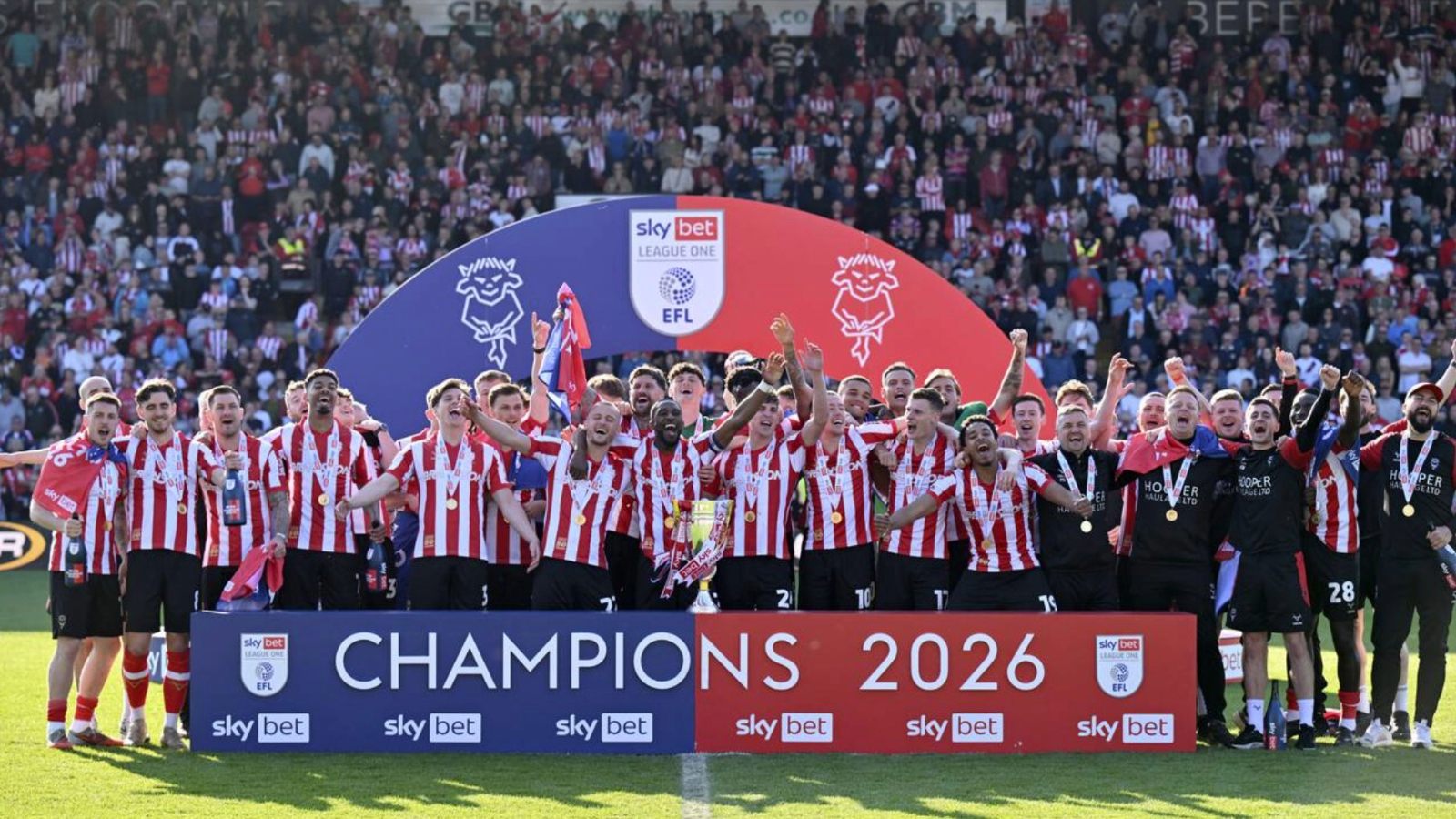
Birmingham City and Sheffield United are in the Championship. Burton Albion, Lincoln City and Port Vale are in League One — Lincoln having just won the division, Port Vale having just dropped into it from above.
Crewe Alexandra, Walsall and Grimsby Town are in League Two. Manchester City sit at the top of the Premier League.
The pyramid has been redrawn several times since 1892, but if you are mapping out accurate football predictions on this weekend’s EFL fixtures, you are still betting on names that were on the league ladder before the invention of the offside trap.
That is not nostalgia. That is the actual structure of English football below the Premier League.
Founding status means nothing
Founding status in English football guarantees nothing.
That is the single thing the 1892-93 table demonstrates more clearly than any modern league document, and it cuts against the way EFL clubs are usually discussed.
There is no inherited prestige in the pyramid, no protective floor for institutional age.
The clubs that vanished from that table were not the lowest. They were the most exposed.
Bootle finished eighth and dissolved within months of the season ending, their league place handed to Liverpool.
Darwen finished third — squarely in the promotion conversation — and had been in the First Division the previous year.
They were arguably the first club ever relegated between divisions in English football, and they spent the next century drifting downward before folding in 2009.
Near-death
A phoenix club now plays in the tenth tier.
Northwich Victoria finished seventh and now play in the Midland League Premier Division, the ninth tier, after surviving two administrations in the 2000s.
Burton Swifts merged into Burton Wanderers in 1901, became Burton United, then folded into the modern Burton Albion lineage in 1950.
Walsall Town Swifts became Walsall FC in 1896. Burslem Port Vale liquidated in 1907 and reformed as Port Vale.
Each survival came with at least one near-death.
And then there is the middle, which is where the thesis sharpens.
Crewe Alexandra, Walsall and Port Vale have been operating continuously for over 130 years without ever playing top-flight football.
Crewe spent decades known mostly for youth development. Walsall and Port Vale have flickered into the second tier on rare occasions and come straight back.
Long-term stability
They have promotions, relegations, a couple of administrations between them, and an iron consistency at being neither successful nor extinct.
Their long-term mediocrity, treated as a punchline by rival fans for generations, turns out to be a survival strategy.
The clubs that overreached did not survive intact. The clubs that ran out of money did not survive at all.
The clubs that simply existed at roughly the same level for a hundred-plus years are still here, fielding teams every Saturday in front of crowds that, in raw terms, are not far off what their great-grandparents drew.
This is the part that complicates the EFL’s modern self-image.
The Championship has spent the last decade marketing itself as a relegation dogfight where Premier League parachute money distorts everything, and the lower tiers have leaned into the underdog story.
But the longer arc of the league shows something different. Long-term stability — what one of this site’s own pieces called the Championship’s mid-table trap — is not a sign of failure to launch.
It is, structurally, the most successful state a Football League club can be in.
Broke the pattern
The clubs that broke that pattern in either direction mostly do not exist anymore, or exist only as Premier League brands their original supporters would not recognise.
It is also why short-term momentum at this level swings so violently on small inputs.
Lincoln have just won League One and are heading back to the Championship for the first time in nearly seventy years.
Port Vale have just been relegated in the opposite direction.
They started the 1892-93 season in adjacent rows of the same table, finished it within two places of each other, and have now diverged by two divisions in the space of nine months.
Names like Chris Wilder and Michael Skubala come up in EFL discussion so often because the gap between staying alive and staying still in this part of the pyramid almost always runs through the dugout, and the consequences of getting it wrong are, on this 130-year evidence, permanent.
The Class of 1892 ended up scattered across six tiers of English football.
Three reached the top flight. Three are anchored in League Two. One is in the ninth tier, one is in the tenth, and two no longer exist in any meaningful sense.
The trajectories had less to do with how those clubs finished that first Second Division season than with whether they survived the next century without breaking themselves.
The league table changes every weekend. The ladder underneath it has been more or less the same since Gladstone.




Follow us
Read our latest news on any of these social networks!


Tackle the News
- Sign Up for our weekly Football League Newsletter Today!