Football clubs keep returning to casino advertising and betting partnerships for one reason. The money is simply too significant to walk away from. Despite increased political pressure in the United Kingdom and the decision of the Premier League, reflected in premier league gambling sponsorship news today, to remove gambling sponsors from the front of shirts by the end of the 2025/26 season, football clubs continue to negotiate new deals.
Casino advertising is still one of the most aggressive categories in sports sponsorship gambling news in terms of commercial terms. The sector provides scale, speed, and financial terms that most mainstream brands cannot match. For clubs navigating tight margins, these deals are not optional extras. They are structural revenue.
The Benefits for Football Clubs
For many clubs outside the elite revenue tier, sponsorship income, often covered in sports sponsorship gambling news, is not a side issue. It shapes transfer budgets, supports day-to-day operating costs, and directly determines how competitive a squad can be. According to Gambling Insider, sponsorship expert Sean Connell of The Sponsor was unambiguous about the financial dependency many clubs have developed. Connell stated:
“For many Premier League clubs, particularly those outside the very top tier, sponsorship income, particularly from casino advertising, is a critical part of the financial model. It directly affects transfer budgets and therefore competitive performance on the pitch.”
That explains a great deal about casino advertising. These are not soft commercial preferences driven by casino advertising. They are hard financial realities. Clubs do not sign gambling sponsors because they enjoy the controversy. They sign them because the alternative is a meaningful reduction in income, and in a competitive league, that reduction has consequences on the pitch. Connell expanded further on the regulatory dimension:
“From a sponsorship perspective, the experience of the front-of-shirt gambling ban tells us something important about how clubs respond to regulation timelines. As long as partnerships remain legal, clubs will generally continue to take the casino advertising revenue available to them.” He was equally direct about the broader market pattern:
“If there is still regular uncertainty around so-called Asian betting partners, we should expect clubs to continue signing or renewing those deals for as long as they remain permissible. Historically, in sponsorship markets, the flow of casino advertising money rarely stops until regulation clearly makes a category illegal.”
That last point matters enormously. Clubs are not defying regulators. They are operating legally, and the legal space, at least for now, remains open. Casino advertising strategies in football are not reckless; they follow a clear commercial logic that exists precisely because the regulatory framework has not yet closed the door.
| Why Clubs Continue Casino Advertising Partnerships | Impact |
| Revenue fills transfer budget gaps | Direct squad quality effect |
| Non-gambling replacements offer lower fees | Up to 38% market value drop |
| Deals remain legally permissible | No compliance barrier to signing |
| Asian betting partners still legally ambiguous | Grey area sustains deal flow |
Football Clubs with Casino Advertising Sponsors
You really start to see how big casino advertising sponsorship is in English football when you look at individual club deals, something often pointed out in industry coverage. The site somagyarkaszinok.com has compiled a selection of casinos that sponsor football teams, and the figures attached to those partnerships reveal why clubs are reluctant to move on.
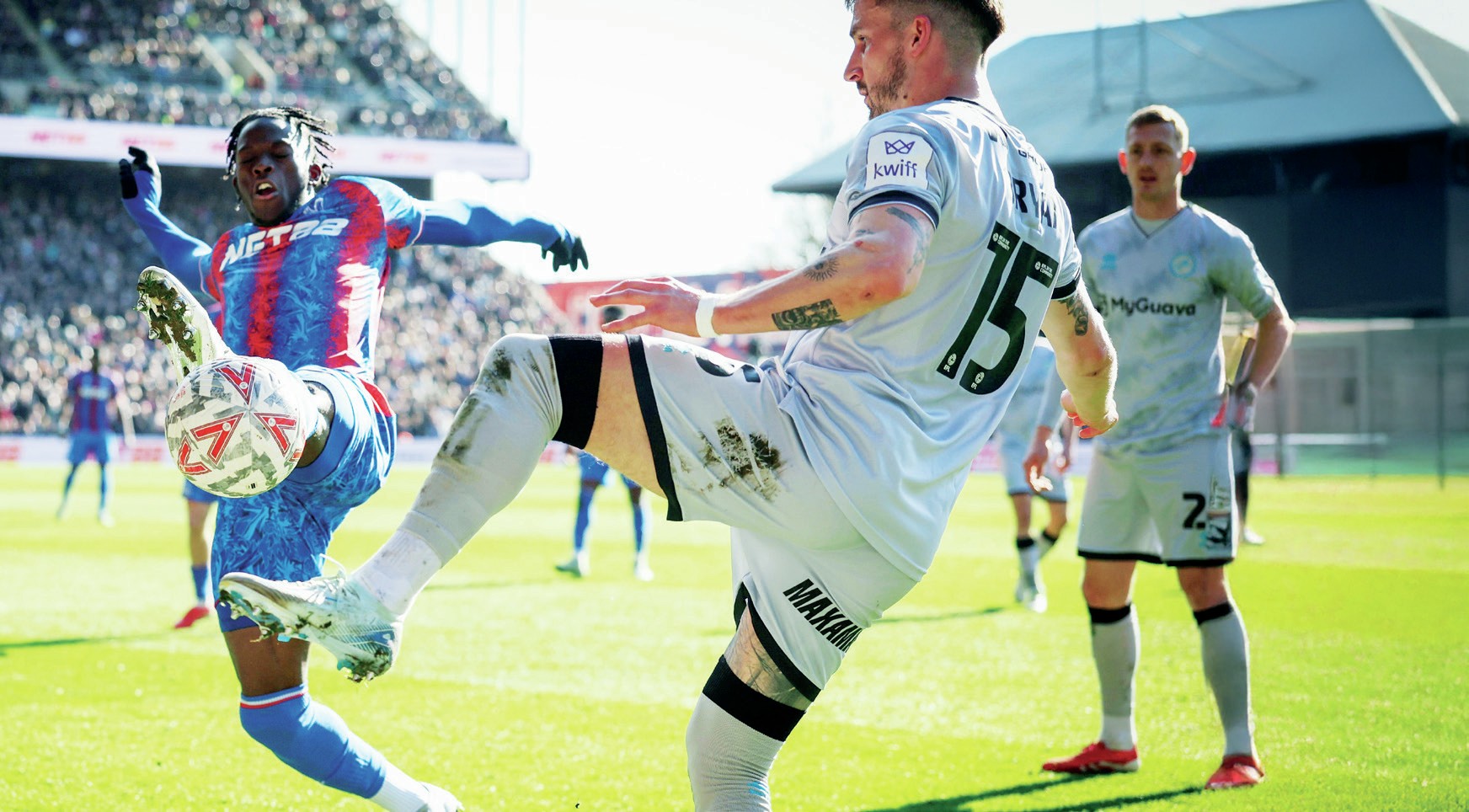
Crystal Palace (ManBetX, £6.5 million per year)
The most prominent brand currently displayed on Crystal Palace FC jersey ads includes the Malta-based operator ManBetX, with whom the record-breaking deal was signed in 2017. The operator has used this partnership as a means of casino advertising its brand through all forms of media, both offline and online, across the UK and the world, thus making the Crystal Palace jersey a global casino advertising platform.
Fulham (DAFABET, £3 million per year)
The reentry of Fulham into the Premier League in 2018 marked the start of new business prospects. Asian bookmaker Dafabet did not waste this opportunity and took out a two-year sponsorship agreement with Fulham that gave the bookmaker permission to sponsor the club shirts including the male and female teams. This provided Dafabet access to millions of viewers worldwide through casino advertising since the league was shown to more than 500 million viewers, and it was also seen to have given Fulham a financial boost at a critical stage of their development.
Everton (SportPesa, £10 million per year)
In 2017, Everton partnered with the African gaming company SportPesa in a front-of-shirt deal estimated at up to £10 million annually. It is a figure that, notably, was never formally confirmed by the club. The Liverpool Echo reported the valuation based on available commercial intelligence. Five years of that casino advertising income is transformative for a club of Everton’s size and ambition.
Newcastle United (Fun88, £6.5 million per year)
The Chinese betting firm Fun88 and Newcastle United agreed to a deal in which they would sponsor Newcastle United’s shirts in the summer of 2017. The initial deal was worth £6.5 million annually. This casino advertising deal helped Newcastle United achieve a position among the top ten most commercially active clubs in England.
West Ham United (Betway, £10 million per year)
Betway has been West Ham United’s principal sponsor since 2015. In 2019, the club signed a six-year renewal worth £60 million in total, approximately £10 million per year. That is not incidental revenue. It is the core commercial infrastructure. Removing it without replacement would require West Ham to either find an equivalent non-gambling partner or absorb the loss elsewhere.
Clubs Will Maintain Gambling Partnerships Until Rules Tighten
In April 2023, Premier League football clubs collectively decided to end the practice of having gambling companies on the front of shirts by the 2026/27 season. This was a clear commercial deadline. What it failed to do was to prevent football clubs from entering and renewing gambling partnerships right up to that deadline, and indeed afterwards in other forms.
More than half of Premier League clubs had a betting sponsor on the front of their shirts in the 2024/25 season, and five of those companies were not licensed by the UK Gambling Commission. That is a significant detail.
The financial logic is not hard to follow. AFC Bournemouth reportedly earns £6.1 million ($8.1 million) annually from its deal with BJ88. That figure is described as 49% above market value for a club at that level of the table. No rational commercial director walks away from that without a comparable offer on the table.
The front-of-shirt gambling ban will reduce the market value of those sponsorship slots by as much as 38% for clubs currently carrying betting brands. One commercial director, who refused to identify himself, said that the best non-gambling proposal their club had had was one-fifth of what their gambling sponsor was contributing. The main facts about the existing situation with sponsorship:
- By 2023, eight clubs in the Premier League had gambling shirt sponsors, totalling about PS60 million annually;
- In May 2025, the Gambling Commission reminded the clubs that they would be put at risk of legal proceedings by sponsors affiliated to TGP;
- Everton continued displaying Stake.com branding after the operator lost its UK license;
- Sunderland maintained its deal with W88 despite regulatory warnings;
- Championship clubs collectively earned over £40 million annually from gambling sponsorships.
The Regulatory Framework Is Still Developing
The most consequential enforcement action of recent years came in May 2025, when the UK Gambling Commission issued a £3.3 million penalty against TGP Europe, ultimately forcing the white-label operator out of the UK market entirely. It was TGP’s second major penalty. The 2025 enforcement went further. The license was surrendered. The operator left.
That is a meaningful outcome. But it has not, by itself, changed club behavior at scale. The government’s broader consultation on unlicensed betting sponsors, announced in early 2026, signals a more coordinated approach than previous efforts. The Illegal Gambling Taskforce adds institutional structure to that intent. Whether it translates into legislation clubs genuinely cannot work around remains the open question.
The timeline problem is real. While a consultation continues, clubs face no legal obligation to act. While Parliament has not passed new legislation, clubs can legally sign deals with operators in the grey-zone Asian betting partner category. And while that category remains ambiguous in law, the commercial incentive to use it does not disappear.
The commercial history of gambling in Premier League football is consistent on this point. The flow of money does not slow until regulation unambiguously stops it. The government has signaled its direction. What remains uncertain is speed, and in the gap between signal and legislation, clubs will continue doing exactly what they have always done.


The League Paper
MILLAR AIMS FOR REPEAT MISSION

The League Paper
O’S GIVE DANE HIS CHANCE TO BE GREAT…

The League Paper
SILKY SWANS GIVE LONG-SUFERING FANS REASON TO CHEER

Follow us
Read our latest news on any of these social networks!


Tackle the News
- Sign Up for our weekly Football League Newsletter Today!